I come out and measure the route
I look at where the walk will run, ask whether a car will cross it and how you'll use it, and note where water collects now. You get a written estimate that spells out what's included.
Old walk cracked, lifted or holding puddles? We build a new concrete sidewalk that sheds water and gives you grip when it's wet.
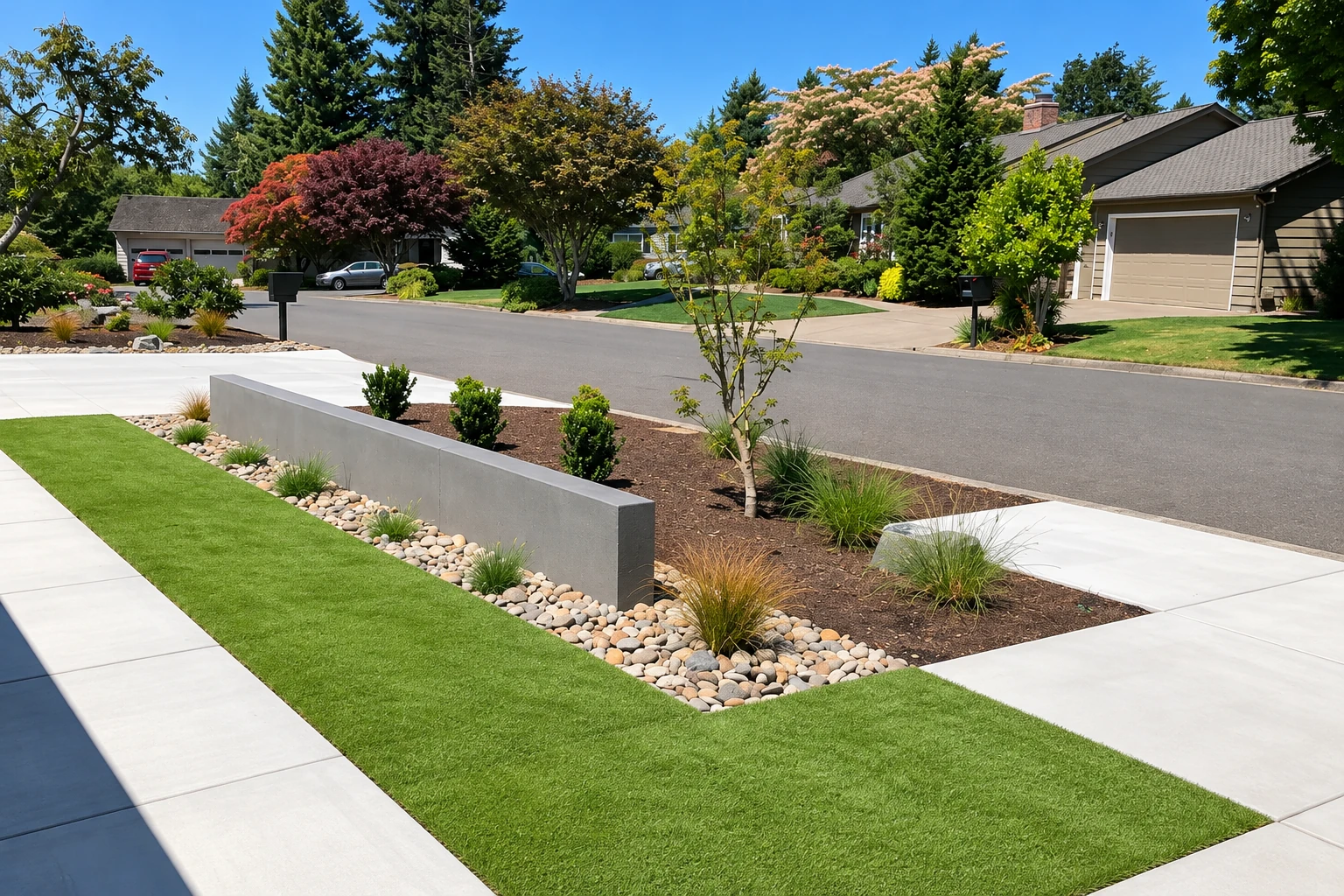
Concrete sidewalk building in Rancho Cucamonga means forming, pouring and finishing a new walk to your door, gate or backyard on ground that's been dug out and packed so it doesn't settle. Most of the job is prep you never see once the concrete is down.
Most people call us because the old walk has cracked into pieces, one panel sits higher than the next and catches a toe, or water sits by the front door after it rains. Some just have a dirt path worn across the lawn and want something solid. We're based in Rancho Cucamonga and take jobs in many cities around it across the Inland Empire.
The price moves with the length and width of the walk, whether there's old concrete to break out and haul off, how much digging the base needs and whether a car crosses it. The schedule turns on any permit the job needs, the weather on pour day and the wait while the concrete cures. Your written estimate gives you the figure for your walk.
I handle every sidewalk job myself, from the first look at your yard to the last check, so you're dealing with the same person the whole way.
I look at where the walk will run, ask whether a car will cross it and how you'll use it, and note where water collects now. You get a written estimate that spells out what's included.
We're licensed and fully insured. I started this business in 2013. Our own trained crew does the work, and I'm on site running it.
Once you say go, we take care of any permit the job needs, set the forms and pour when the day suits it. When it's done, I walk the finished sidewalk with you.
I start with the route. We look for low spots along it, because a walk that holds a puddle stays wet and slick, and one that tips toward the house sends runoff where you don't want it. We set the walk to fall away from the house and keep it clear of big tree roots where we can, since a good route does more for a walk than stronger concrete. Where a car crosses, we beef up that stretch so it can carry the weight, and the whole walk gets a textured finish instead of a slick one. Then we cut control joints, shallow grooves that give the concrete a planned place to crack, because concrete can crack and I'd rather pick where it does.
A new walk often leads somewhere else that needs work. If it ends at a garage with a cracked or uneven slab, we also do garage floor concrete. If you want color or a pattern instead of plain gray, our decorative concrete work covers it, and I'll tell you which looks still give you grip outdoors.
Most of what makes a walk last happens before the truck shows up, because once concrete sets, changing it means breaking it out.
We break out any old walk and haul it off, then strip the topsoil, roots and soft dirt, because anything organic left under a slab rots and leaves a gap. What's left is the subgrade, the ground the walk actually sits on.
We compact any loose fill and keep surface water running away from the work before and after the pour, because ground that gets soaked can lose its ability to carry the walk. If the budget's tight, this is the last place I'll cut, since you see a nice finish on day one but the base decides whether the walk stays flat.
On hot days we pour early, because concrete placed in midday heat can end up with a weak, dusty top. We finish it while it's still workable and cut the joints before it hardens, so the cracks don't pick their own spots.
Curing is the wait while the concrete gains strength, and it starts as soon as the finishing is done so the top doesn't dry out too fast. Foot traffic can come back sooner than cars can on the crossing, and I'll tell you when for each on pour day.
Send us the walk's rough length and width, a few photos of the route and whether a car crosses it, or call (909) 552-8210. We reply within one business day, then I come out, look at the route and leave you a free written estimate at your property. There's no obligation and no pressure to book.
(909) 552-8210Concrete sidewalk in the Riverside area usually costs about $4.50 to $10.50 per square foot, which is a nearby guide to what the market charges, not our price. Where your walk lands depends on breaking out old concrete, how much base work it needs and whether a car crosses it. The estimate I write after seeing your route gives your number, and our work is satisfaction guaranteed.
Yes, California requires a state contractor license when a job needs a building permit, uses additional workers, or costs $1,000 or more in labor and materials. The state's concrete license class covers forming, pouring and finishing flat concrete work, or flatwork, which is where walks, patios and driveways fall.
Usually something under the walk moved it, like tree roots, washed-out ground, poor fill or water sitting under the slab, and a heaved or settled panel becomes a trip hazard. The fix should go after that cause instead of just grinding down the raised edge, so I look at what moved it before we talk about replacing anything.
A textured surface and no puddles. A smooth troweled finish looks clean but can be slippery when wet, so we use a broom finish, a light brushed texture that gives your shoes something to grab. On an outdoor walk I'd take grip over a glassy look every time.
If your walk needs a city permit, it goes through the city's Building and Safety department, which handles permits online and doesn't issue them over the counter. We apply for it with the city and keep track of it, so you don't have to. Where a walk is built to the city's standard plan, curb and gutter go in separately from the sidewalk, and the joints in the walk line up with the joints in the curb.
California's license board says concrete contractors can't file an exemption from workers' compensation, even with no employees, so it's fair to ask anyone you're comparing how their crew is covered. We build walks the same way in Upland, Ontario, Fontana, Chino and the other cities around Rancho Cucamonga.
We pick up at (909) 552-8210 seven days a week, 8 AM to 9 PM, so you can call after work and describe the route while you're standing on it.
If you've got a question about a walk you're planning, send it over and we'll give you a straight answer.
Tell us about your project