I come out and look at the lot myself
I've run this business since 2013, and I still go out to every site before we price it. I measure, look at where water runs now and ask what the lot has to carry and how you'll use it.
Old lot cracking, sinking or holding water? We build concrete parking lots on even, packed ground, sized for the trucks that use them.
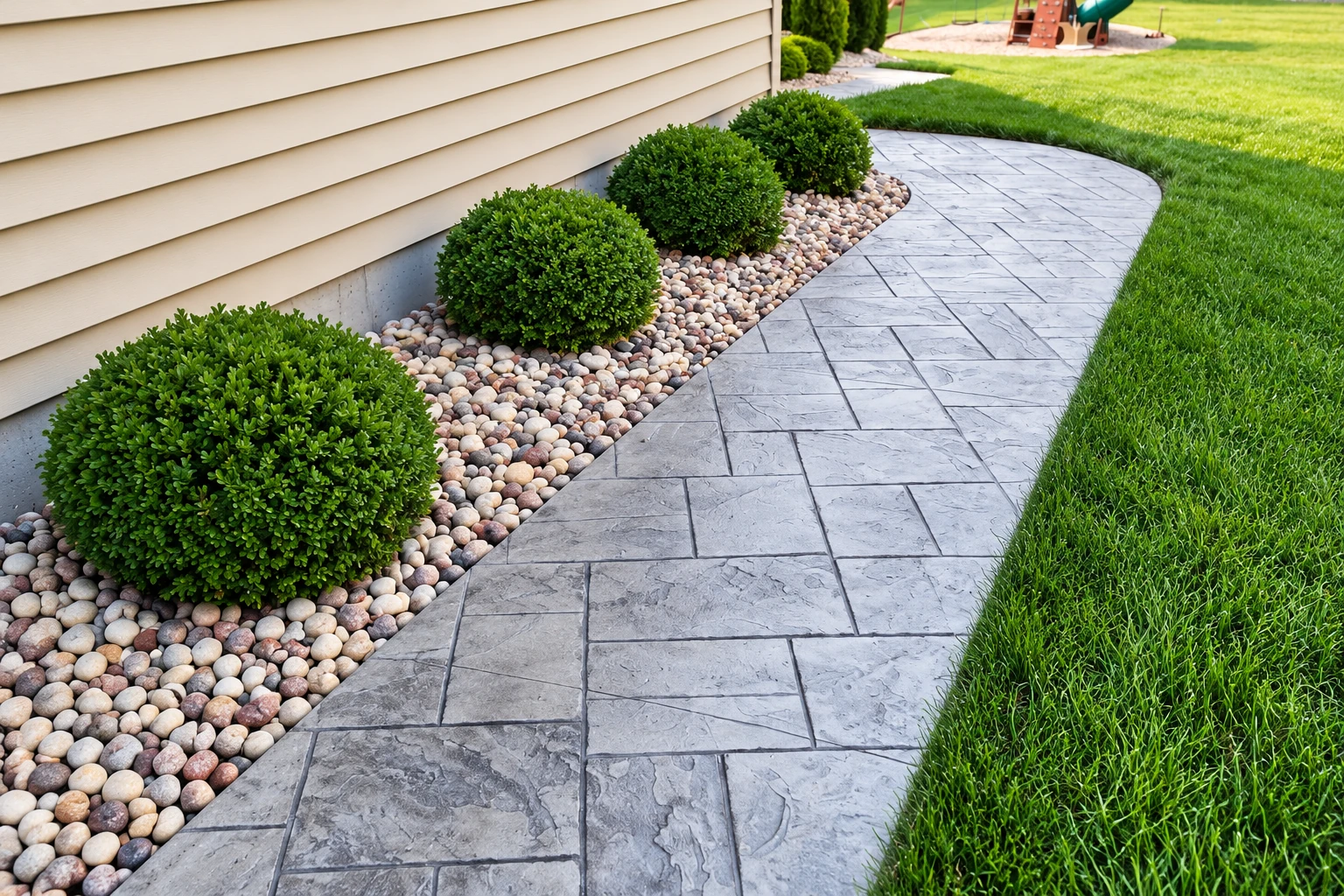
Concrete parking lot building in Rancho Cucamonga means we prepare the ground, then form, pour and finish a slab sized for the heaviest truck that will use it, so the lot holds its shape under turning wheels, drains with only a gentle slope and needs little upkeep.
Most owners call me for one of two reasons. A building needs a lot, or the old one has cracked and sunk where trucks turn and holds water after every rain. The price moves with the heaviest truck the lot carries, because that sets the thickness, and then with the size, how much ground work the site needs, whether old pavement has to come out and how much drainage work it takes. Your written estimate spells out what's included, so you see where the money goes before anything is poured.
The schedule turns on the ground work, on any plan review the city requires, which I cover below, and on picking a good day to pour. The city takes permit applications online, and if your lot needs a permit, we apply for it and keep track of it so you don't have to.
You deal with me from the first visit to the last walkthrough. Here's how it goes.
I've run this business since 2013, and I still go out to every site before we price it. I measure, look at where water runs now and ask what the lot has to carry and how you'll use it.
You get a written estimate that lists what's included, from the ground work to the finish. If the site needs more ground work than you expected, you see it on paper, not on pour day.
We don't hand your job to another outfit, and I'm on site on pour day. We're licensed and fully insured, and once you say go we set the forms, pour when the day suits it and walk the finished lot with you.
I start with the heaviest truck that will drive on the lot, because that decides how thick the slab has to be, and the square footage comes second. Then we get the subgrade, the soil the slab sits on, even all the way across, with no hard spot next to a soft one, because a slab cracks where its support changes. When that soil is prepared right, a lot usually doesn't need a special base layer, so the work goes into the ground itself. This is the first place people want to save money, since nobody sees the ground once it's covered and a nice finish shows on day one. I'd cut back on the finish before I'd cut back on the ground. Concrete can still crack, and I'll tell you that straight, but good ground and well-placed joints decide where it cracks and keep it level when it does.
Some lots need more than a slab. Light poles, carports and low walls along the edge stand on concrete footings, and we can pour them as part of the same job. If the building beside the lot has settled and water's running toward it, foundation raising can bring it back up before we set the lot's grades to match.
Once the ground is ready, we build in this order, and each step has a reason for where it sits.
We set the slope so water runs off the lot and away from any building, because a lot that holds water or drains toward a door is a problem you live with for years. We also mark where people will walk so those paths get a surface they won't slip on.
We set the forms to those grades and place rebar, the steel bars inside the slab, where the trucks need it. If the concrete cracks, the steel holds the pieces together and level.
We pour early, before the heat of the day dries the top too fast and leaves it weak and dusty. We cut control joints, shallow lines that tell the slab where to crack, while the concrete is still young, then give it a broom finish, a light texture that gives tires and shoes grip.
Curing is the wait while the concrete gains strength, and the lot is ready for people on foot well before it's ready for trucks. I walk it with you, tell you the day vehicles can come back on and go over the upkeep to plan for.
Send the form with the lot's size, the heaviest trucks that will use it and any site plans you have, or call (909) 552-8210. We reply within one business day, set a time, and I come out to your property for a free estimate with no pressure to book. Satisfaction guaranteed.
(909) 552-8210Thinner concrete works for passenger cars and light trucks, and heavier commercial and industrial trucks need thicker concrete, according to one concrete trade group's guide. The same guide says lots for heavy industrial trucks should be designed one at a time. Tell me the heaviest truck that will use yours and I'll size the slab to it.
Not much, because concrete lots have fairly simple upkeep, and the main job is fixing small damaged spots early, which national concrete guidance calls the least costly first repair. That work usually comes around 10 to 15 years in, so you can plan for it and keep the disruption to the lot small.
A contractor licensed by the state for concrete work, a license that covers forming, pouring, finishing and installing pavement and flat concrete. California requires a license whenever the work needs a permit of any kind, even if the job is under $1,000. Ask any contractor for their license number and look it up with the state licensing board.
Usually not for a busy lot or one that carries heavy trucks, because national stormwater guidance says permeable pavement isn't as strong as regular asphalt and doesn't suit lots with high traffic and extreme loads. The same guidance says it doesn't belong where fuel can leak or where chemicals are loaded, unloaded or stored, so for most working lots I'd stick with solid concrete.
If your lot is part of new development or a redo of an existing site, a city handout says it has to follow the Santa Ana regional water board's water quality management plan, which sets the pollution controls a site needs once construction is done. A civil engineer prepares that plan and the city approves it, so get your engineer started early, because what the plan calls for can change how the lot drains.
We're based in Rancho Cucamonga and take jobs in many cities around it across the Inland Empire, including Upland, Ontario and Fontana. The calls are much the same everywhere we go, a building that needs a lot or an old lot that's cracked where trucks turn and holds water after rain.
We pick up seven days a week from 8 AM to 9 PM, so call (909) 552-8210 or email sales@ranchocucamongaconcrete.com whenever it suits you.
If you're still working out what your lot needs, send me a message and I'll give you a straight answer.
Tell us about your project