The owner comes out to look
I started this business in 2013, and I still look at every job myself. I walk the site and ask what the footing has to carry and how you'll use what goes on top, because that decides the footing before anything else does.
Building a wall, patio cover or addition? We dig and pour footings sized to carry what goes on top, so it stays put.
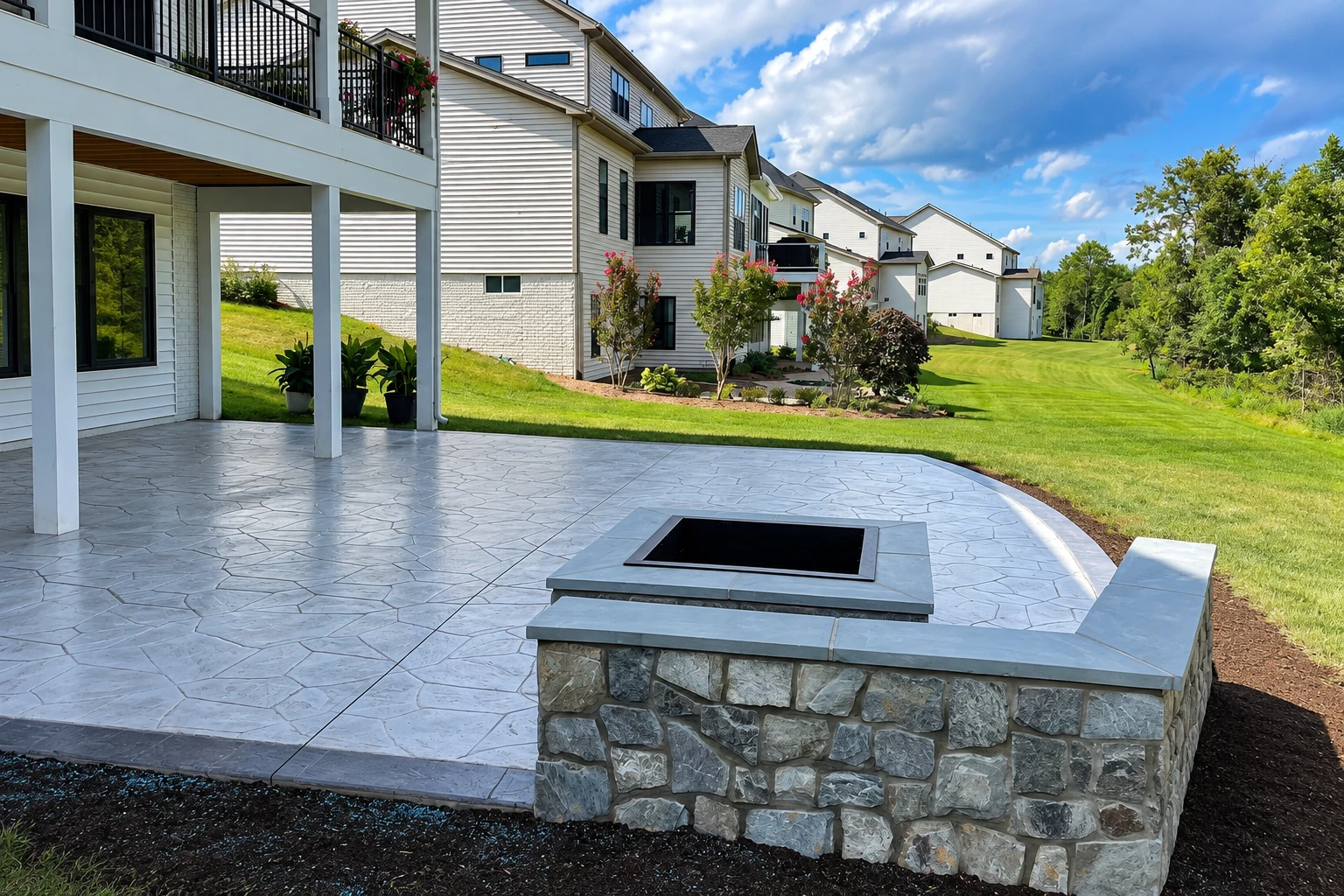
Concrete footings carry the weight of what you build, a block wall, a patio cover post or a room addition, down into the soil, and in Rancho Cucamonga, CA our crew digs, forms and pours them to match that load.
Most footing calls start with a plan, not a problem. You're adding a wall, a shade structure or a room, and someone has told you it needs footings. There are a few kinds, like a thickened edge on a slab, a continuous footing under a wall, or a single pad under one post, and which one fits depends on what you're building. Ask any contractor which kind they'd use and why, and if they can't tell you, keep looking.
The price moves with how long, wide and deep the footing runs, how much steel goes in it, and how hard the ground is to dig and reach with a truck. The schedule mostly turns on whether your job needs a permit and on the weather for pour day. The written estimate I leave you spells out what's included, so you see your own number before anything gets dug.
From the first call to pour day, you deal with me and our own crew, not a string of subcontractors. Call (909) 552-8210 or use the form below to set up a visit.
I started this business in 2013, and I still look at every job myself. I walk the site and ask what the footing has to carry and how you'll use what goes on top, because that decides the footing before anything else does.
Before I leave, you get a written estimate that lists what's included, so you can hold it up against anyone else's line by line. If something on it doesn't make sense, ask me then, not after the concrete's in the ground.
We're licensed and fully insured. Our own trained crew does the digging, forming and pouring, and I'm on site running it, so the person who wrote your estimate is the one checking the work.
Footings carry everything above them, so before we dig I want to know exactly what's going on top, and we pick the footing type to match. Then our crew digs, cleans out the trench, sets forms and steel, and pours. A footing ends up buried, so nobody ever sees whether it was done right, and that's exactly why it's the last place I'd let a budget get trimmed. I'd rather tell you a footing needs to be bigger than pour one I'm not sure of.
Sometimes the call is about an old footing that's already let go. If a wall or slab has dropped, look at foundation raising before you pour anything new. When a new footing has to run through an existing patio or driveway, we handle the concrete cutting ourselves, so the edges are clean and the slab you're keeping doesn't crack from a jackhammer.
Every footing job runs in the same order, and each step is there because skipping it shows up later as a crack or a lean.
We lay out the footing from the plan and dig down to firm, undisturbed soil, because loose fill settles and takes the footing with it. Then we square up the trench so the footing comes out the width and depth it's supposed to be.
We pull out loose dirt and debris and keep standing water out of the trench, since concrete poured into mud doesn't sit on solid ground. Then we set forms and rebar, the steel bars that give concrete strength it doesn't have on its own, wherever the job calls for it.
The concrete goes in and we work it down around the steel so no air pockets are left behind. We level the top where the next part of the build will sit, so the framer or mason starts on a true surface.
Curing is the wait while concrete gains strength, and loading a footing too soon is how a good one gets cracked. We strip the forms once it's ready, haul off the dirt and tell you when it's ready for the next trade.
Tell us what you're building, a rough footing length in feet and your address, through the form or at (909) 552-8210. We reply within one business day and set a time for me to come out, look at the site and leave you a free written estimate at your property. There's no pressure to book.
(909) 552-8210An installed residential strip footing across the US usually costs about $5 to $19 per linear foot, with concrete, labor, digging and forms included. That's a national range, not our price, so treat it as a rough guide. The written estimate I leave after the site visit gives you the number for your own lot.
If the footing job needs a permit, or the person doing it hires anyone to help, it takes a licensed contractor. California lets an unlicensed person take small jobs under $1,000 only when the work needs no permit and they work alone. The state licensing board describes a concrete contractor as one who forms, pours, places, finishes and installs concrete, which is exactly the work a footing takes.
The City of Rancho Cucamonga issues permits for work in the city, and the whole process runs online, not over the counter. If your footing job needs one, we apply for it with the city and keep track of it, so you don't have to. If you're not sure whether yours does, check with the city.
Yes, but hot weather guidance says to place concrete during the cooler part of the day, even at night, to limit the heat it sits in. So on hot days we pour early or late, and you'll want the site open for the truck and crew then. We also keep extra water out of the mix, because water added to cool concrete or make it easier to work can cost it strength and long-term durability.
Before you plan a new structure, look your lot up on the state's earthquake fault zone map, which shows fault zones and seismic hazard zones for any parcel in California. If your parcel sits inside a mapped fault zone, the city or county requires a geologic investigation, prepared by a California-licensed geologist, showing the building won't go on an active fault before it permits a new project. Parcels inside a mapped liquefaction zone, where loose, wet soil can lose its strength in a quake, need the stability of the foundation soils investigated for buildings people live or work in.
Across San Bernardino County, the ground can also sink over time, mostly from groundwater pumping, long droughts and the geology underneath, and that can crack the ground and settle foundations unevenly. That's a countywide condition, not a fact about your street, but it's part of why I care what a footing sits on. We're based in Rancho Cucamonga and take footing jobs in many cities around it across the Inland Empire, including Upland, Fontana and Ontario.
A footing is the hardest part of a build to change once it's in, so call (909) 552-8210 or send the form and let's get the plan right before anyone digs.
If you've got a wall, post or addition planned, send us the details and I'll tell you what the footings need.
Tell us about your project